Showing posts with label Inquiry. Show all posts

Wednesday, 1 September 2021

Find a Fact | Inquiry

I completed a can-do activity called fact find. This task is about informations about something like a person or a topic. I did a fact find about an athlete called Gabi Rennie

First I wrote in my introduction. Gabi Rennie was born on the 7th of july 2001 in Christchurch. Gabi has 2 siblings Liam Rennie and Lachlan Rennie.

Next I wrote down five facts about Gabi Rennie. For Example: She started plying football at the age of 5.

To finish up I put in the information sources.

I enjoyed this task because I learnt new instresting facts about Gabi Rennie.

Friday, 13 August 2021

Inquiry

I made a whare tapa wha.

First I made a drawing about myself and what I do. There are 4 pillars Taha Tinana, Taha Wairua, Taha Hinengaro, Taha Whanau. I put 3 words in each box.

Next I made slides including Olympic sports. I chose archery.

Finally I wrote down all the things that olympics athletes would do.

I enjoyed This activity because I like to see what I do in my spare time.


Wednesday, 4 August 2021

Inquiry | Oympics

We compared the Oympics to Panmanure Bridge school.

First we finished an activity called this vs that. We had to compare the olympic motto, the creed, the values, and the logo to PBS. 

Next we made a slide deck about the similarities and differences. For example: The Olympic motto and the PBS motto. There both a short sentence or phrase chosen as encapsulating the beliefs or ideals of an individual.

Afterwards we did our own logo and our own motto. My motto was work hard dont give up then you can achieve what ever you can belive.


Friday, 2 July 2021

Party Popper | Prototype

My company and I tested different parts of the party popper

First we chose what size rubber band we would want to use.

Then we started on the striker. We chose a pen as our striker because there is a part that would make the pen stay connected to the rubber band.

Finally we assembled the prototype we made a small hole in the bottom of the cup and pushed the rubber band through the hole. Next I placed a tooth pick and connected it with the rubber band so it could stay on. Next we took a photo of the prototype.

My group and I learnt a lot about how to make prototypes.


Friday, 21 May 2021

The Three Simulair Simple Machine

There are three simple machines that are all similar in some way. They are the wege, the lever, and the incline plane.


Thursday, 13 May 2021

Simple Machines

We looked for simple machines in our school. They are: Inclined plane, wedge, lever, pulley, wheel and axel, and screw.

A inclined plane is used to move things from low ground to high ground.

A pulley is used tomove things from a high point to a low point just like our flag.

A lever is used to lift up heavy objects.

A screw is used to hold objects together.

A wedge is used to separate objects.

Wheel and axel helps move things easier. 


Thursday, 6 May 2021

Simple Machines

Simple machines are tools that are used to make work easier. There are six diffrent simple machines: a wedge, a screw, a pulley, a lever, a incline plane, and a wheel and axle.

A wedge is simple machine it is a triangular shaped tool used to split things in half.

A screw is another simple machine that holds an object in place.

A pulley is simple machine that uses a rope and a wheel this tool is used to lift objects from a low point to high point. 

A lever is used for lifing objects and measuring weight. 

A incline plane simple machine that is also used to lift objects like a heavy box.

A wheel and axle is used to move heavy objects by pushing it to make it roll.


Thursday, 1 April 2021

Maori Haka | Aboriginal Haka

I learnt the diffrences and similairites between the Maori haka and the Aboriginal war cry.

I first watched a video that showed people doing the Haka and the Aboriginal war cry.

After I wrote the similairities based on what I saw on the video.

Next I wrote the diffrences.

I enjoyed this task because I learnt the diffrences and the similarities between the Maori Haka and the Aboriginal war cry. This helps me understand how each culture shares similarities and diffrences.


Wednesday, 10 March 2021

LS1's Treaty

LS1 learnt about the 3 Ps in the Treaty of Waitangi and how they apply to our learning.

First Mr Ogilvie introduced the 3 Ps in the Treaty of Waitangi. They are Protection, Partnership and Participation. Then groups we wrote statements about the 3 Ps in LS1. LS1 figurd out that the 3 Ps are all conected. After that we used our group ideas and thought about how they connect to me.

I chose these three statements because they will help me be sucessful with my learning in LS1. I am going to work on my participation and try to encorage others to partisipate in learning.


Thursday, 18 February 2021

About Me 2021

Greetings

My name is Mahdi. I am from Afghanistan. I am in LS1 at Panmure Bridge School. I enjoy playing Badminton and digital games like Minecraft and Roblox.


Monday, 14 December 2020

Inquiry | Presentation

We have presented our presentation for our emergency shelter so that we could get the contract.

First we introduced our company to our clients.

After introducing our company we explained why our shelter is the best. We also explained why we chose the materials for our shelter and why we chose the shape.

Lastly we were given our feedback from the clients of our presentation.

Our feedback was about how we did not explain about our poles that anchor our shelter into the ground. The second piece of feedback was about how we did not show our cardboard model. Our last piece of feedback was about our group not explaining how the Tsunami will slide over our shelter without tipping over our shelter. Next time I will try to give more details about our shelter so people can get a better understanding.


Thursday, 26 November 2020

Inquiry

Different types of shelters can keep people safe by using the correct materials depending on what disaster they are being protected from.

When building a shelter, measuring the amount of materials being used is important so it keeps it balanced.

An example of materials used for a tsunami shelter are concrete, chicken wire, metal ties, aluminum, popsicle sticks, steel door, and hard clear plastic.

Using chicken wire is good for putting in the concrete so it can connect it to the other sides.

Hard clear plastic can be used for the windows because it doesn’t break easily like glass and because it's transparent which allows people to see what's happening on the outside.

Popsicle sticks are good for supporting the force of the impact. This material can also be used to anchor the shelter into the ground so it doesn’t tip over. The properties of wood are the shape that has been made.

Not every material can support every natural disaster. Different types of shelters can keep people safe by using the correct materials depending on what disaster they are being protected from.

When building a shelter, measuring the amount of materials being used is important so it keeps it balanced.

An example of materials used for a tsunami shelter are concrete, chicken wire, metal ties, aluminum, popsicle sticks, steel door, and hard clear plastic.

Using chicken wire is good for putting in the concrete so it can connect it to the other sides.

Hard clear plastic can be used for the windows because it doesn’t break easily like glass and because it's transparent which allows people to see what's happening on the outside.

Popsicle sticks are good for supporting the force of the impact. This material can also be used to anchor the shelter into the ground so it doesn’t tip over. The properties of wood are the shape that has been made.

Not every material can support every natural disaster.


Friday, 20 November 2020

Inquiry | Model Materials

This week we have been thinking about different materials to build our shelter.

First we brainstormed materials and searched up materials that will help protect us from the weather.

Next we chose 4 materials that were best to protect against tsunami which were reinforced concrete, straight steel beam, stainless steel rods, and straight metal sheet.

Afterwards we decided on how big, small, long and wide our shelter will be.

Lastly we wrote how much materials we needed to make our shelter.

I really enjoyed researching different types of materials that protect against natural disasters.

LI.to prepare order for construction.

Friday, 6 November 2020

Inquiry | Shelter

This week our group has designed an emergency shelter that will protect against natural disasters. 

First we looked at different shelters and the shape of the shelter. We had to figure out if it was a good or a bad shelter in different conditions.

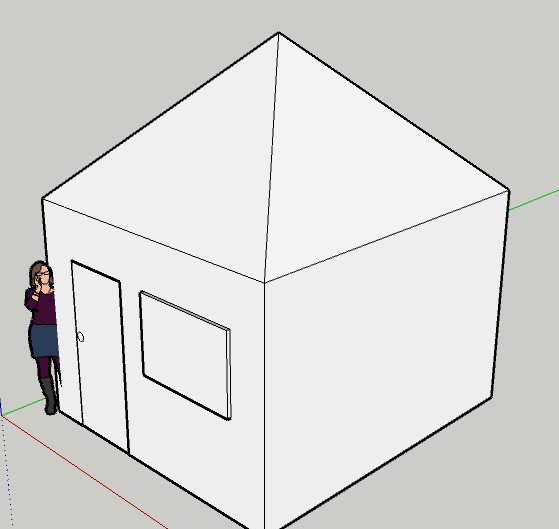
Next we thought of a shape for our shelter which was a pyramid, and a cube. The reason why we chose these shapes was because if the wind was coming into the corner the wind would split into different directions. If the wind blows to a direction to the wall it will slide up that might make a vacuum. 

Then we created a shelter using the app Sketchup.

The materials that might be used to create our shelter were bricks, and stones. Bricks and stones are different types of bricks that are both heavy materials that can not be pushed by strong wind.
If we changed things of the shelter it would be adding windows on each side so we know what's happening outside. 

During this activity we found thinking of the shape hard but we found this fun because we were able to create a shelter.

LI.to digitally model an emergency shelter.


Friday, 23 October 2020

Inquiry | Insulators

Insulators are materials that don't let heat escape. My group tested different materials to see which material was the best at insulation, having a lower number for average cooling rate means the material is good at insulation.

The best insulator for keeping it cool were plastic paper and polystyrene and the worst insulators for keeping it cool were glass and tin.

The best insulators for keeping it warm were glass and polystyrene and the worst insulators were tin, paper and plastic.

The best insulator for keeping it cool and keeping it warm was polystyrene.

LI. To learn and practise experimental methods.


Thursday, 15 October 2020

Inquiry

This week for Inquiry we experimented with different materials to find which material is the most absorbent and to learn how to conduct a precise experiment. 

The material we used were, stone, sand, paper towels, nappies and cotton. Then we used a measuring cylinder to measure 100ml of water, then we added 5 drops of blue food colouring. After we used a scale to measure 50g of each materiel.

Next we got a tray and placed the material we chose, in it. After, we poured the 100ml of water onto the material and then poured all the water that was not absorbed back into the measuring beaker to see how much water the material absorbed.

I enjoyed this experiment and learned that nappies are very absorbent.

LI: to determine the absorbency of different materials using experimental methods.    


Friday, 11 September 2020

Inquiry | Low, Likely, Possible, Elevated and Extreme

This week we learnt about risks.

We rated situations on low risk, likely risk, possible risk, evaluated risk, and extreme risk. Low is In most cases are risks that can be avoided by common sense. Likely in most cases can be avoided by common sense with application of skill. Possible are Risks that are contained by application of safety procedures. Evaluated is something that safety procedures only limit some danger. Extreme is something that out number the safety procedures and danger that is about to happen.

Later we wrote our own situations that match each risk level.

Low, Likely, possible, evaluated, and extreme, all describe different levels of risk.

LI - To access likelihood.
LI - To access consequences.

Friday, 4 September 2020

Hazards and risks

My group and I did inquiry this week, for this task we found some hazards for example - Swimming pool, coffee, sanitiser, etc.

We had to find risks to match our hazards, risk and hazards have something slightly different about each other.

First, we founded hazards for school, community, home, and sport.

Then, we explained each hazard using a risk, the risk should be about the hazard.

Later we moved onto each category.

Hazards are a type of risk, or something dangerous, it can also be a method that can be hard to do.

A risk is a situation involving danger, it can be something harmful.

Risk and hazards are really important.

LI - to demonstrate prior knowledge.

Friday, 12 June 2020

Light and Sound Vocabulary

Light is a energy that make things visible. Sound are waves that can be heard. 

First we had to match words from a list with the definitions. We could use a dictionary to help us.

Next we did the Draw, Act, Animate, Find.

My group did echo for draw we drew a face and a wall and the face had a speech bubble that said hello we also drew the sound waves hitting the wall and bouncing back.

LI: to learn the vocabulary of light and sound.

Friday, 5 June 2020

Properties of Light

Light makes things more visible to the human eye.

One property of light is: light can't be seen through opaque objects. This is proven because when the flashlight was covered by an opaque object the light didn't go through the opaque object.

Another property of light is that light can be reflected. This is proven because when the light shined towards the mirror the light bounced of the mirror.

Light can create a rainbow because the prism separates all of the light's colours. This is proven because when the flashlight shined on the prism it created a rainbow.

There are many more property's property of light check this Google Document for more information.

LI: To observe the properties of light